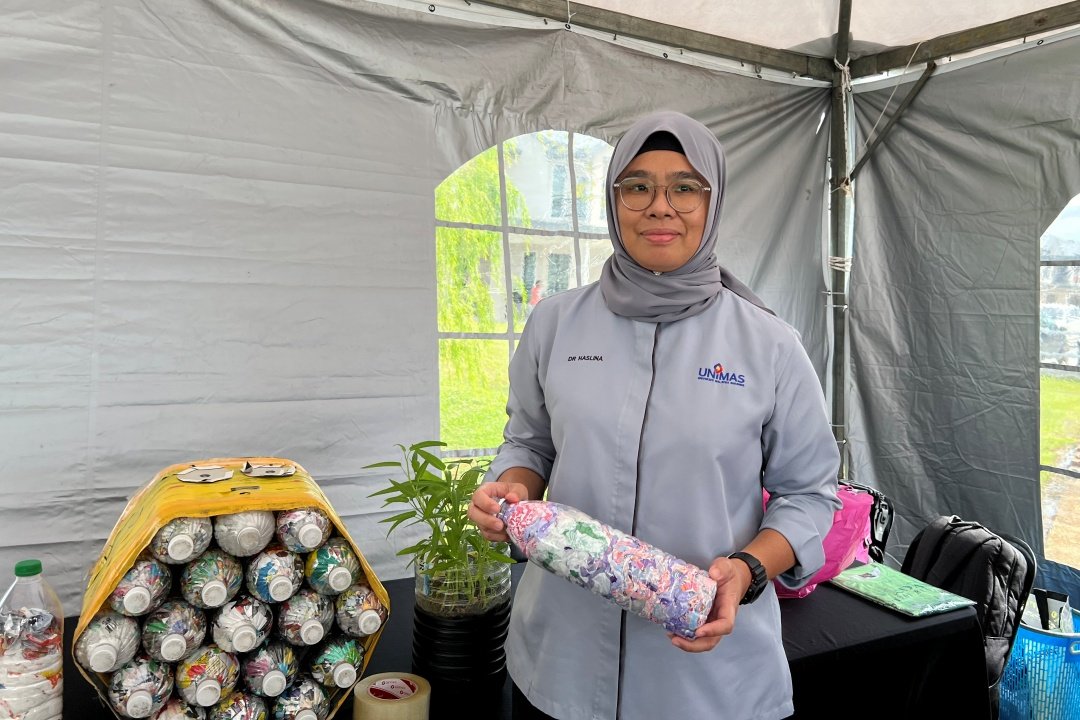
Dr. Haslina Hashim holds an example of an ecobrick during the sustainability exhibition at the programme.
What started as a modest initiative at Universiti Malaysia Sarawak (Unimas) has blossomed into a remarkable environmental project. This initiative focuses on educating students and communities about the importance of recycling through the innovative use of ecobricks.
For the past five years, Dr. Haslina Hashim, a senior lecturer from the Faculty of Social Sciences and Humanities (FSSH), has been at the forefront of this project. She has successfully transformed plastic waste into durable bricks that can be utilized to create functional furniture.
Innovative Recycling Solutions
“The concept emerged due to the overwhelming amount of plastic waste with no effective disposal options. While plastic bottles can be sold, items like straws and other non-sellable plastics often end up in landfills,” Dr. Haslina explained during the ‘Sustainability Within, Green Earth Beyond 2025’ programme.
The process consists of packing various types of plastic, particularly non-biodegradable materials, into polyethylene terephthalate (PET) bottles, solidifying them into ecobricks. These ecobricks can then be creatively used to construct items such as indoor stools.
“When used outdoors, ecobricks can be affected by rain and heat, leading to brittleness. However, when kept indoors, they can last for many years,” she clarified.
Expanding Educational Outreach
The initiative has expanded its reach beyond the university, impacting schools in Asajaya and Kota Samarahan. These schools have embraced the project, incorporating it into their environmental and innovation clubs, as well as geography classes.
“We educate our students about ecobricks, and then empower them to share this knowledge with younger students,” Dr. Haslina noted.
“Three years ago, we began by engaging nearby schools. So far, we have reached five schools, including SMK Kota Samarahan, SMK Muara Tuang, SMK Wira Penrissen, SMK Siburan, and SMK Sungai Tapang,” she added.

Dr. Haslina poses with her students at their ecobrick exhibition zone.
Collaborating with the Natural Resources and Environment Board (NREB) Sarawak, the Unimas team has also conducted workshops at several schools, such as SMK Pesantren Abdul Taib Mahmud, SMK Hajjah Laila Taib, SMK Asajaya, SMK Sadong Jaya, and SMK Sadong Hilir last year.
Participants in the three-series workshop ‘CARE PROJECT: Reduce Plastic, Make Fantastic Ecobrick 2.0’ engaged in the entire process — from creating ecobricks to crafting their own products and competing with other schools.
Long-Term Environmental Awareness
“Ecobricks are designed to endure. A single bottle weighing between 500 to 700 grams can contribute to a robust piece of furniture, preventing approximately 12 kilograms of plastic from entering the environment,” she stated, emphasizing the benefits for schools with limited furniture resources.
Dr. Haslina also stressed the long-term environmental implications of plastic waste.
“Plastics can take up to 500 years to decompose and may infiltrate the human food chain through marine life. Studies have detected traces of microplastics in humans, originating from fish that consume feed containing microplastic components, which we ultimately consume as well,” she cautioned.
Looking Towards the Future
“This is a critical issue, and we aim to disseminate this knowledge as widely as possible,” she emphasized.
Looking ahead, Dr. Haslina believes that ecobricks can serve as a viable solution to plastic pollution while simultaneously benefiting the economy.
“Even if an ecobrick is damaged over time, it can be repaired and reused. In Peninsular Malaysia, there exists a system known as by-bed ecobricks, where high-quality ecobricks are purchased at reasonable prices to produce new items,” she explained, highlighting how this could encourage more individuals to adopt a sustainable lifestyle.
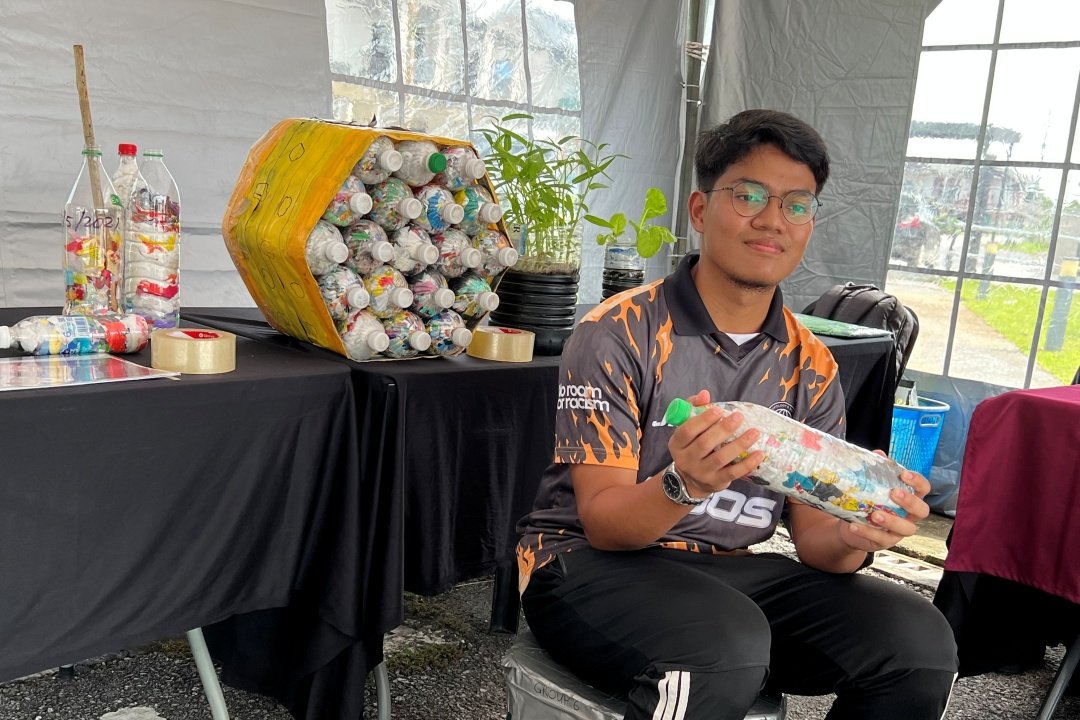
A student enjoys a moment on a stool made from ecobricks, proudly holding one in hand.
Dr. Haslina concluded by emphasizing the importance of addressing plastic pollution as a global crisis.
“I hope we become more proactive, considering the implications of plastic use each time we utilize it,” she said.
This journey, evolving from a small university initiative to a widespread community educational movement, illustrates how practical sustainability projects can empower students and foster a lasting commitment to environmental responsibility.
The post Unimas ecobrick initiative turns plastic waste into tools for sustainability appeared first on Borneo Post Online.
📈 Looking for Ways to Grow Your Savings?
After budgeting or planning your property expenses, explore smarter investing options like REITs and stocks for long-term growth.
📈 Start Trading Smarter with moomoo Malaysia →(Sponsored — Trade REITs & stocks with professional tools)

Danny H is a real estate negotiator in Miri, specializing in residential and commercial properties. He provides trusted guidance, updated listings, and professional support through MiriProperty.com.my to help clients make confident property decisions.