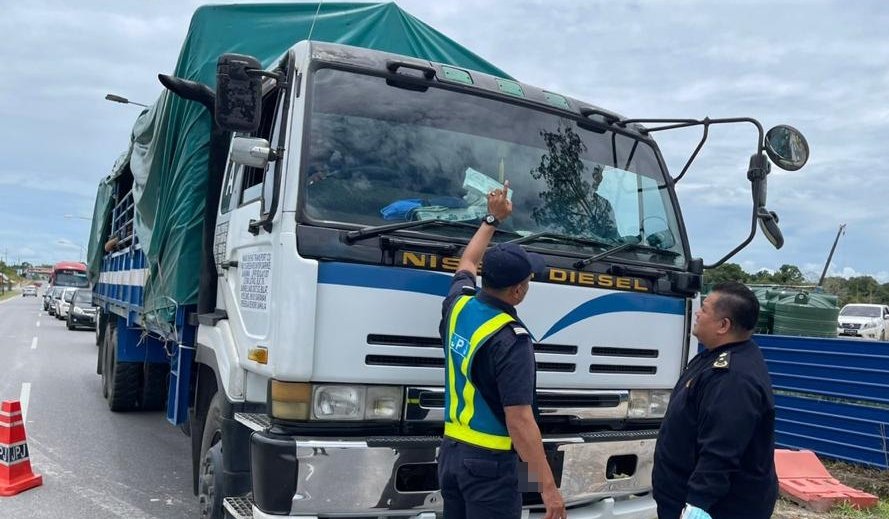
President Jong Boon Khong has emphasized the association’s strong support for the government’s initiatives aimed at enhancing road safety, curbing overloading, and protecting public infrastructure.
The Sarawak Lorries Transport Association has expressed growing concerns regarding the recent stringent enforcement of standard lorry bucket regulations, which has led to a significant increase in operating costs. This situation may compel transport operators to adjust their rates to sustain their businesses.
“The intensified enforcement has drastically diminished the load capacity of many lorries, leading to a notable decrease in operational efficiency,” Jong stated.
Impact on Operations
“Jobs that previously required only one trip now necessitate two or more,” he noted. “Fuel consumption has surged, drivers are logging longer hours, and the overall costs associated with vehicle depreciation and maintenance have escalated.”
“If operators continue to charge the previous transport rates, many will struggle to manage these additional burdens, and some may even be forced to cease operations,” Jong explained in an interview with The Borneo Post.
He underscored that adjusting transportation rates is not merely a choice but rather a necessity brought on by the new enforcement conditions.
Call for Collaboration
“To ensure continuous logistics services and protect the stability of Sarawak’s supply chain, some form of rate revision seems unavoidable,” he added.
The association is advocating for prompt discussions between its members and relevant government bodies, such as the Land Transport Department (JPJ), the Public Works Department (JKR), and the Land and Survey Department.
“We propose convening a meeting with industry stakeholders to explore practical enforcement strategies, particularly concerning revised transportation charges for ongoing projects, including price adjustments between JKR and contractors,” Jong suggested.
He also called for a reasonable transition period to facilitate these changes.
“The government should consider establishing a buffer period or transitional mechanism to give operators time to adapt,” he stated. “This includes modifying vehicles, reorganizing operations, and coordinating with clients and relevant departments regarding cost adjustments.”
“We are committed to safety and regulatory compliance, but it is equally important for the industry to remain viable. If enforcement is not aligned with practical implementation, the resulting disruptions may have broader economic implications,” he cautioned.
Jong assured that the association would persist in engaging with government agencies to advocate for solutions that ensure safety while maintaining the sustainability and efficiency of the logistics sector.
📈 Looking for Ways to Grow Your Savings?
After budgeting or planning your property expenses, explore smarter investing options like REITs and stocks for long-term growth.
📈 Start Trading Smarter with moomoo Malaysia →(Sponsored — Trade REITs & stocks with professional tools)

Danny H is a real estate negotiator in Miri, specializing in residential and commercial properties. He provides trusted guidance, updated listings, and professional support through MiriProperty.com.my to help clients make confident property decisions.