
Miri’s real estate landscape has shifted rapidly over the past few years, shaped by economic cycles, new township growth, and increasing participation from both homeowners and business operators. What makes this city unique is how differently each segment behaves. Residential, commercial, and industrial properties move with their own rhythm, influenced by local demand, buyer sentiment, and business expansions. Using real transaction insights and supported by public records from NAPIC’s Open Sales Data, this article explores how these segments evolved between 2022 and 2025.
Instead of presenting raw numbers alone, the sections below blend data with on-the-ground stories—capturing how everyday decisions made by buyers, tenants, and investors shape the overall market trend.
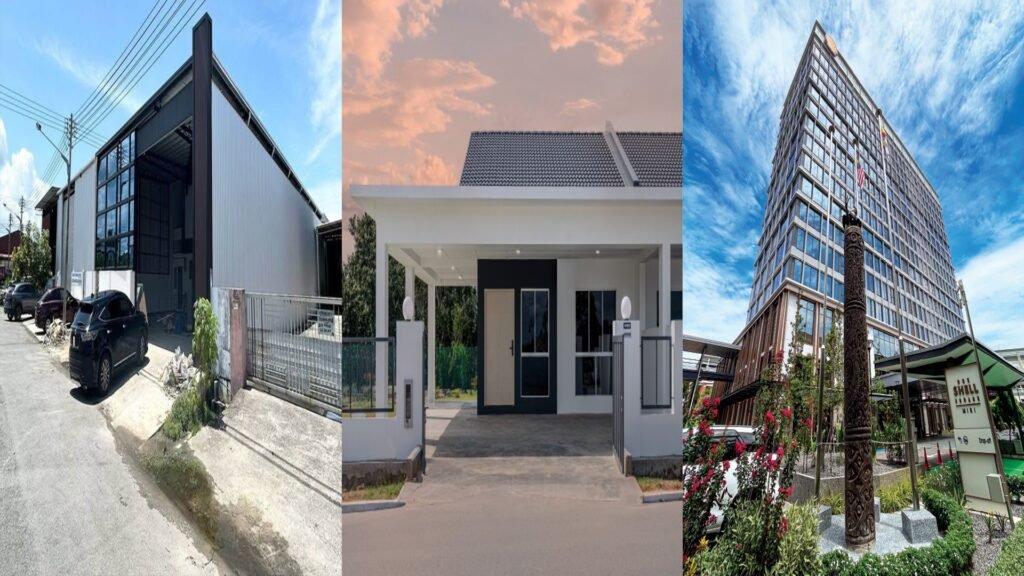
How Miri’s Market Evolved After 2022
In the period just after 2022, Miri experienced a wave of renewed real estate activity. Returning business optimism brought buyers back into the market, especially in areas long seen as stable and family-friendly. Meanwhile, commercial owners adapted to changing business models, and industrial players ramped up operations in response to regional supply-chain needs.
Each property category tells its own story—some steady and predictable, others shaped by rapid transformations.
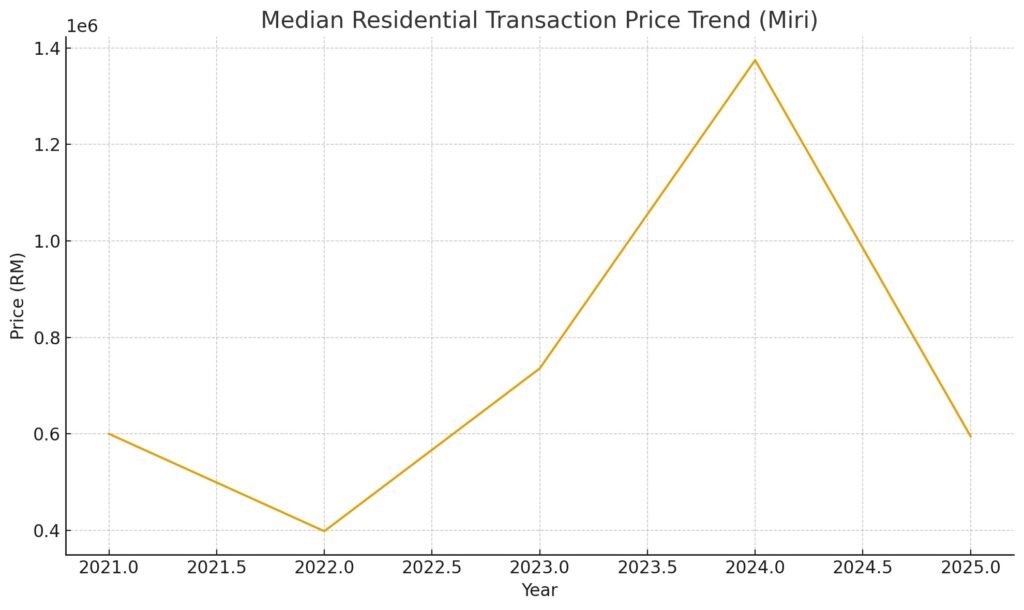
Residential Property Trend (2022–2025)
Residential buyers in Miri tend to favour long-term stability. Families, young couples, and upgrader owners represent a significant portion of demand, especially in sought-after neighbourhoods like Airport Road, Curtin Water, and Amfield Garden. Despite global uncertainties, this segment has held firm over the years.
Why Residential Prices Stayed Strong
Between 2022 and 2025, median residential transaction prices ranged between RM350,000 and RM500,000. This is consistent with Miri’s preference for landed homes, particularly terraced and semi-detached houses. Demand remained resilient due to several key factors:
- Steady household formation from young families
- Strong preference for landed properties vs. high-rise units
- New developments offering modern layouts at affordable prices
- Proximity to schools and work areas
One notable trend: many buyers reported purchasing homes as a way to “reset” life after COVID-era disruptions—seeking comfort, more space, and long-term security. This emotional shift is felt strongly in township areas where neighborhood lifestyle plays a large role.
Residential Market Momentum
While there were no dramatic price spikes, the consistent climb reflects healthy demand. Developers also played a part by pacing their launches, ensuring supply did not outstrip demand. This helped stabilize prices, making residential real estate a reliable investment option throughout 2022–2025.
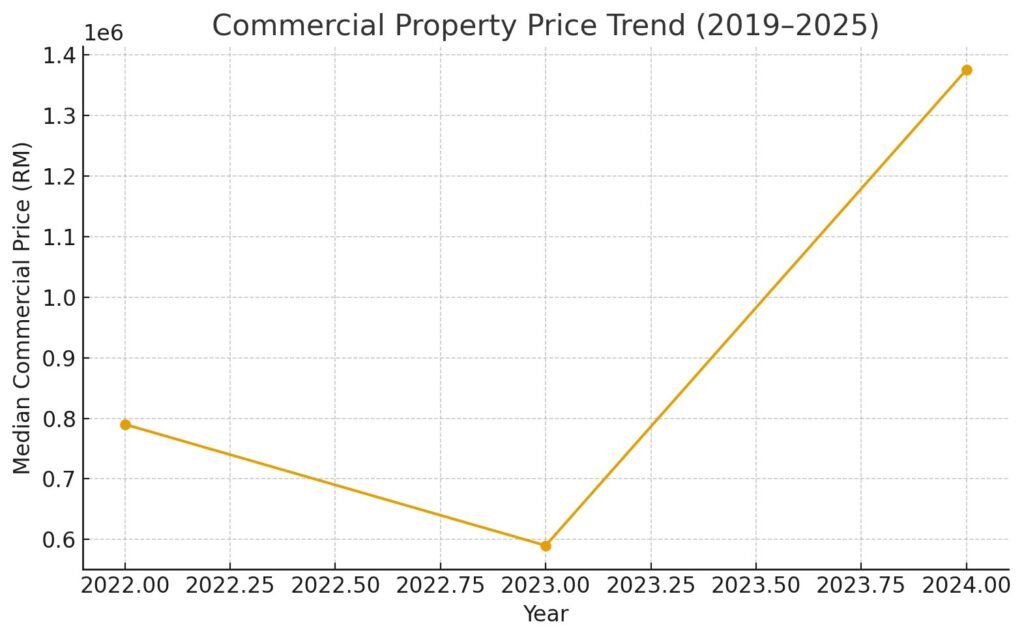
Commercial Property Trend (2022–2025)
If residential demand is driven by families, commercial demand in Miri is powered by entrepreneurs and business owners. While not as predictable as housing, the commercial segment benefitted greatly from the post-pandemic business revival.
A walk through Boulevard Commercial, Marina Phase 1, or Taman Tunku Commercial during lunchtime paints the picture clearly—more cafes, renovated shopfronts, and vibrant foot traffic.
Key Patterns That Shaped Commercial Prices
Between 2022 and 2025, the commercial property segment demonstrated a moderate upward trend. Matured business zones experienced the most consistent transactions, especially those known for strong rental demand on ground-floor units.
- Shoplots remain the preferred commercial investment class
- New F&B concepts boosted demand for corner units
- Office units saw slower but steady recovery
- Retail clusters near residential zones continued to outperform
The rise of mixed-use commercial buildings also began to shift buyer expectations. Businesses showed greater interest in units offering dual functions—office upstairs, retail or service operations downstairs. This hybrid model has been especially popular among small entrepreneurs and agencies expanding their presence.
Drivers of Commercial Market Growth
The commercial market strengthened due to increased business formation, franchise expansions, and the shift toward community-based retail. Miri’s suburban townships, especially in Permyjaya and Taman Tunku, experienced higher transaction activity because business owners preferred being closer to customer bases.
Although growth was steady, commercial prices did not rise as sharply as residential or industrial. But they remained highly attractive to investors seeking rental returns, especially in well-trafficked zones.

Industrial Property Trend (2022–2025)
Among all property categories, industrial real estate has shown the fastest appreciation in Miri. This segment, once considered quiet and stable, has become one of the most active markets due to the rise of SMEs, logistics operators, and oil & gas supply-chain businesses.
Visiting zones like Krokop Industrial, Piasau Industrial, or Senadin Light Industrial today reveals a bustling environment of workshops, warehouses, fabrication yards, and distribution centres. Many of these zones have undergone rapid transformation.
Why the Industrial Sector Accelerated
Several forces contributed to the segment’s price growth:
- SME expansions requiring modern industrial lots
- Oil & gas supplier growth fueling demand for fabrication and storage space
- E-commerce logistics boosting warehouse requirements
- Limited supply of well-located industrial land
- Shift to newer light-industrial zones offering better accessibility
Industrial values are also influenced by the condition of the building. Units with high ceilings, upgraded power supply, large yard space, and renovated offices command premium transactions.
Industrial Market Behaviour (2022–2025)
Compared to residential and commercial properties, industrial real estate experienced the most volatility. Prices rose faster, especially in modern zones like Senadin and Permyjaya. Older industrial areas such as Krokop and Piasau remained strong due to their centrality.
In many cases, buyers raced to secure available units because supply could not keep up with demand—especially for properties with large built-up areas suitable for manufacturing or storage.
Comparing the Three Segments Side by Side
Each property segment in Miri plays a distinct role and behaves differently over time. When viewed side by side, their characteristics become clearer:
- Residential: stable, predictable, driven by families
- Commercial: moderate growth, shaped by business activity
- Industrial: fastest-growing, powered by SME and logistics needs
This diversity is what makes Miri one of the most balanced mid-sized property markets in Malaysia. Investors have choices depending on their budget, risk appetite, and long-term goals.
How Buyers and Investors Can Use These Trends
These insights are more than just historical observations—they help guide better decisions. Knowing how each segment behaves allows investors to move strategically, aligning purchases with performance patterns.
Actionable Insights for 2025 Buyers
- Residential buyers should act early in stable, high-demand suburbs, where appreciation is reliable.
- Commercial investors should prioritise matured zones with consistent rental demand.
- Industrial buyers may benefit from acquiring units in expanding light-industrial zones where future appreciation is strongest.
Aligning the right property type with the right timing has become key to maximising returns.
Looking Toward 2026 and Beyond
Based on ongoing development trends and economic momentum, Miri’s real estate ecosystem is expected to remain steady and growth-oriented. As new industrial corridors develop and large-scale housing projects continue, each property segment will evolve uniquely but remain interconnected.
Residential stability creates demand for nearby commercial activity. Commercial growth requires logistical support. Industrial expansion fuels job creation—feeding back into residential demand. This cycle keeps Miri’s property market dynamic and resilient.
Reference
For additional verification and deeper exploration of transaction records, visit the official NAPIC Open Sales Data portal, which provides nationwide property data updated regularly.
Frequently Asked Questions (FAQ)
Which property segment performed best from 2022–2025?
Industrial real estate showed the strongest appreciation due to SME expansion, logistics demand, and oil & gas activity. It consistently outpaced residential and commercial segments in terms of price momentum.
Are residential prices still affordable in Miri?
Yes. Although prices have risen gradually, many suburbs still offer units between RM350,000 and RM500,000, making Miri one of the more affordable cities in East Malaysia.
Why is commercial real estate popular among investors?
Commercial units—particularly ground floors in matured zones—offer stable rental returns and long-term demand. They are commonly favoured by small businesses, F&B operators, and investors seeking passive income.
What drives industrial property demand in Miri?
Expansion of the SME sector, oil & gas suppliers, and e-commerce logistics create steady and growing demand for warehouses, factories, and light-industrial units.
Where can I verify transaction prices?
You can review official transaction details at the NAPIC Open Sales Data portal, which offers transparent and searchable property records.
📈 Looking for Ways to Grow Your Savings?
After budgeting or planning your property expenses, explore smarter investing options like REITs and stocks for long-term growth.
📈 Start Trading Smarter with moomoo Malaysia →(Sponsored — Trade REITs & stocks with professional tools)
