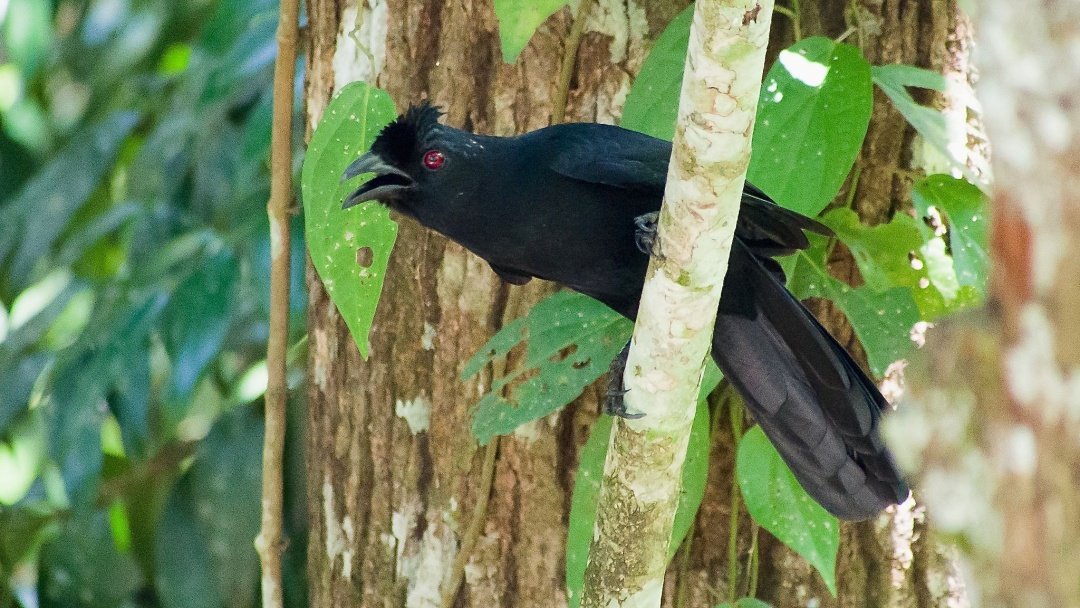
The Bornean black magpie is distinguished by its black feet and legs and perceptive eyes with red irises. — Photo by Mike Prince / Wikimedia Commons
Based on the sightings of a flock of seven magpies in a field of sheep, I have also seen them in my garden, alongside my observations of these fascinating birds in Sabah and Sarawak.
While my experiences have been relatively tame, they are nothing compared to the swooping attack suffered by a friend in Kuching while walking along the River Torrens Park Trail in Adelaide, South Australia, earlier last month.
Behavior and Characteristics
Interestingly, magpies of all types do not hop along the ground; instead, they strut and walk much like humans. I will now focus on three types of magpies: the Malayan black magpie, the Bornean black magpie, both part of the Corvidae family, and the South Australian white magpie, more closely related to the black butcher bird and belonging to the Artamidae family, which includes nine subspecies.
Malayan black magpie (Platysmurus leucopterus)
This species is found across East and Peninsular Malaysia to Sumatera, inhabiting both primary and secondary forests, as well as forest edges and clearings in urban areas. It has adapted well to threats to its natural habitat due to logging, agriculture, and urban expansion.
Physical Attributes
This striking bird has glossy black plumage that shimmers with iridescence, with a body length, including its long tail, ranging from 40cm to 45cm.
With noticeable upper wing white patches visible during flight, a sturdy bill and legs, and piercing orange and black eyes, it is quite distinctive.
Typically, its breeding season begins in March and lasts until June, during which elaborate courtship displays can be witnessed.
Once a pair forms, they collaborate to build a cup-shaped nest high in the forest canopy, using twigs, leaves, and other plant materials.
A clutch of two to four eggs is laid, with both parents taking turns to incubate them.
The newly hatched chicks are blind and helpless, requiring significant parental care from both parents until they fledge after approximately three weeks.
In the wild, they can live for up to 10 years.
Diet and Vocalizations
Omnivorous in nature, their diet comprises various insect species, fruits, seeds, and occasionally small vertebrates.
Renowned for their inquisitive nature and intelligence, their vocalizations are complex and varied, ranging from cackles to melodious whistles, and, like many magpie species, they can mimic other birds.
Bornean black magpie (Platysmurus aterrimus)
Previously considered a variety of the Malayan black magpie, this bird is endemic to Borneo and is a treepie variety. It resides in lowland forests up to an altitude of 300 meters, adapting to diverse woodland habitats, including primary forests, dipterocarp, kerangas, swamp forests, secondary forests, overgrown plantations, and softwood areas.
Characterized by its all-black plumage, it has a distinctive long, broad, and bristly crest. Unlike other magpie varieties, it lacks white wing coloring and is identified by its black feet and legs and perceptive eyes with red irises.
Nesting and Behavior
Often found in family groups, this sociable bird measures about 43cm from head to tail and flies with shallow wing beats.
Its nest is typically built with sticks around eight to ten meters high in small trees, and its diet mainly consists of insects, fruit, and foliage, but it also occasionally consumes small animals and reptiles.
While it can mimic other birds’ calls, very little is known about this crested magpie.
South Australian white-backed magpie (Gymnorhina telonocua)
This species, as previously mentioned, belongs to a different order than other Australian magpies, including the Australian black-backed magpie, which is also found in New Guinea and was introduced to New Zealand in 1864, where it is considered a pest for raiding the nests of other native birds.
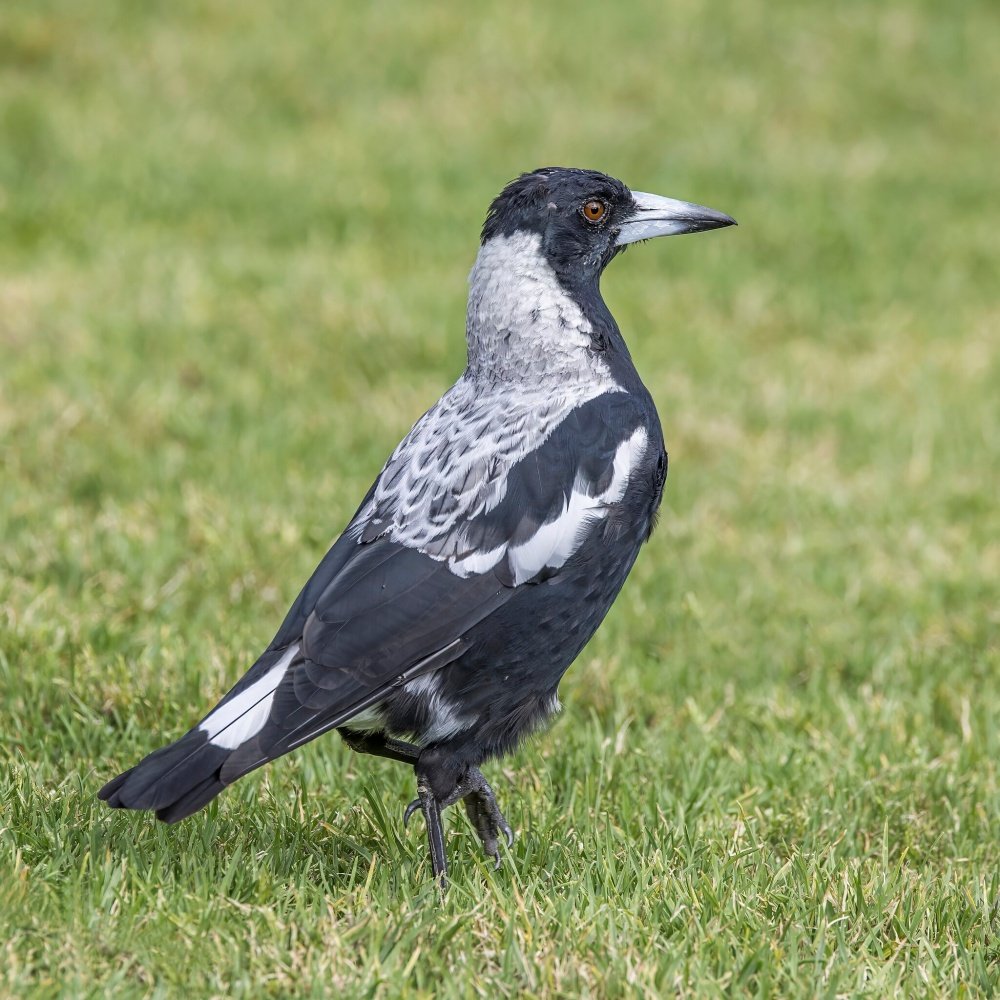
An Australian magpie is seen in the Adelaide Botanic Garden. — Photo by Charles J Sharp / Wikimedia Commons
These magpies range in length from 37cm to 43cm and possess a wingspan of 65cm to 85cm, weighing between 220 grams and 350 grams.
With dull reddish eyes, long legs, and slightly hooked beaks, they can appear quite fearsome.
Nesting and Breeding
Their breeding season typically occurs from August to September and may extend into December. Both male and female birds construct bowl-like nests high in eucalyptus trees using sticks lined with grass and bark.
The female lays between two to five light blue or greenish eggs, and after about 20 days of incubation, the chicks hatch, pink, naked, and blind.
These nestlings are fed by their mother, with the male feeding the female.
The young become independent after six months and leave the nest after eight months to four years.
Diet
An omnivorous bird, it consumes invertebrates such as earthworms, millipedes, spiders, snails, and scorpions, along with ants, beetles, earwigs, caterpillars, cicadas, cockroaches, moths, as well as grasshoppers, frogs, small birds, and carrion, supplemented by figs, rain, walnuts, and tubers.
Swooping Behavior
Many Australian magpies have settled in parks and forest reserves near urban areas, swooping down on unsuspecting individuals passing by trees housing their nests.
This behavior typically occurs during the breeding season from late August to early December.
It is reminiscent of seagulls, which opportunistically swoop down on tourists enjoying ice creams or Cornish pasties in seaside towns in Cornwall and Devon, England.
To date this year, as spring has just ended, around 4,734 magpie attacks have been reported in Australia, with 567 resulting in injuries.
As these birds are a protected species in nearly every Australian state, firearms are prohibited. Many injuries stem from attacks aimed at people’s eyes, as this is an effective way to incapacitate a human.
Cyclists are particularly vulnerable to these magpie attacks, as these intelligent birds learn to recognize familiar faces and often target the same cyclist or walker on their way to work.
In response, cyclists now wear protective helmets with spikes, goggles, and ear protectors!
My friend in Kuching soon altered her route to walk along the opposite riverbank trail in Adelaide.
Cultural Significance
Despite their nuisance, the white-backed magpies have been featured on the South Australia state flag since 1904. Similar to football teams in the UK, like those from Penzance to Newcastle wearing black-and-white shirts and called ‘The Magpies’, the Port Adelaide team in Australia dons the same colors and shares the same name.
For centuries, these magical, intelligent birds have been woven into the legends, folklore, and myths of local communities wherever they are found.
May these legends, like the magpies, never fade away.
In closing, I would like to extend my warmest wishes for a “very Happy Christmas” to the editors, writers, printers, distributors, and readers of The Borneo Post and thesundaypost, as well as my many friends in Sarawak and Sabah.
The post Magical, mythical magpies appeared first on Borneo Post Online.
📈 Looking for Ways to Grow Your Savings?
After budgeting or planning your property expenses, explore smarter investing options like REITs and stocks for long-term growth.
📈 Start Trading Smarter with moomoo Malaysia →(Sponsored — Trade REITs & stocks with professional tools)

Danny H is a real estate negotiator in Miri, specializing in residential and commercial properties. He provides trusted guidance, updated listings, and professional support through MiriProperty.com.my to help clients make confident property decisions.