

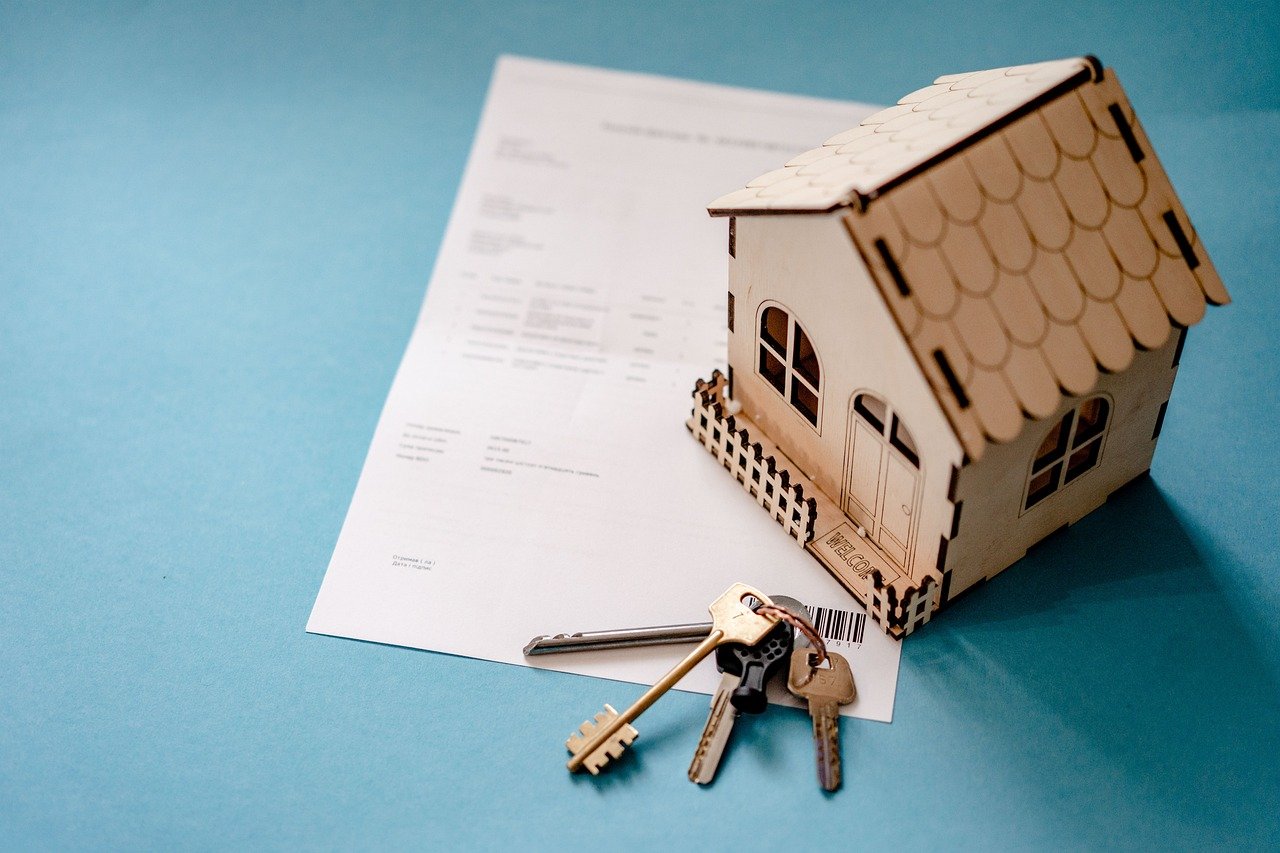
Understanding Investment Vehicles in a Sarawak Context
Investment decisions in Miri and across Sarawak should start from your income stability, savings habits, and risk capacity, not from a specific asset like a house or a shoplot. Before you decide where to put your money, you must understand what type of “vehicle” you are using and how it behaves in our local context. A vehicle is simply a method of growing, protecting, or storing your money over time.
In Sarawak, most investors face three main questions: how much can I commit monthly, how long can I leave the money untouched, and how much value fluctuation can I tolerate without losing sleep. Answering these first is more important than asking whether to buy a terrace house in Permyjaya or a unit trust fund. Only after you are clear on these can you evaluate which vehicles fit you.
A practical way for local investors is to group investment vehicles into three functions: income generators (cash flow), growth builders (capital gain), and value keepers (store of value). Each vehicle behaves differently across these functions and responds differently to changes in Miri’s job market, government spending, and local business activity.
Economic and Income Realities in Miri and Sarawak
Investment choices must match the economic structure of Miri and Sarawak. Miri’s income base still relies heavily on oil and gas-related jobs, civil service, small trading, and service industries like F&B, retail, and tourism. This creates pockets of high-income earners in certain sectors, but also many households with moderate and inconsistent income in others.
Household income in Miri is often lumpy. Contractors, small logistics players, and hawker families may have strong months followed by slow ones. This makes long-term, inflexible commitment dangerous, especially for young families who may face school expenses, vehicle loans, and healthcare costs at unpredictable times.
Another factor is the uneven development between urban Miri areas (like Boulevard, Pelita, Airport Road) and more emerging parts such as Senadin or parts of Bakam. Income opportunities, rental demand, and business turnover can vary widely between these areas, so an investment that is comfortable for a hospital specialist may be completely unsuitable for a teacher couple or a small workshop owner.
Property as an Investment Vehicle in Miri
Property in Miri should be viewed as only one of several possible vehicles, not the default choice. Housing types range from single-storey terrace houses in Permyjaya, double-storey terraces in Taman Tunku, semi-D units in Boulevard vicinity, older detached homes in Krokop, to walk-up flats near town. Each has different entry price, maintenance profile, and tenant pool.
Terrace houses in developing suburbs may look cheap on a monthly instalment basis, but they tie up your cash flow and demand additional spending on renovation, repairs, and occasional vacancy. Meanwhile, commercial units in areas like Waterfront or town outskirts may appear attractive for rental, yet they rely heavily on how the local business environment is evolving, not just on the building itself.
Property can provide both rental income and long-term value protection, but it comes with low liquidity and high transaction costs. Selling a house in Miri can take months, and during slow periods you may need to reduce your asking price or accept longer vacancies. This means property is generally more suitable as a medium or long-term decision after you have emergency buffers and other more liquid investments in place.
Non-Property Investment Vehicles Available to Locals
Before locking yourself into a large loan, consider the non-property vehicles that are accessible to Miri and Sarawak investors. These include fixed deposits, Amanah Saham-type funds, EPF additional contributions, unit trusts, and selected share investments through local brokers. Each has its own role and risk level.
Fixed deposits at local Sarawak banks provide stability and predictability, which suits those with irregular income or short-term goals like school fees or wedding costs. While returns may be modest, the key benefit is liquidity and flexibility; you can adjust or withdraw without selling a house or shoplot.
Collective investment schemes such as unit trusts and certain state-linked funds give exposure to diversified portfolios without requiring direct stock-picking skills. However, investors must understand that values can fluctuate, and there may be sales charges. These are more appropriate for those with stable monthly surplus and at least a medium-term horizon of several years.
Alternative and Store-of-Value Investments
In Sarawak, many families quietly use alternative vehicles as a store of value rather than as high-growth investments. These include gold, certain types of productive land, small equity stakes in local businesses, and even livestock for some rural communities. The main goal is often preservation of purchasing power rather than chasing high returns.
Gold jewellery, for example, is commonly accumulated by households in Miri and across northern Sarawak as a portable store of value. While it is not always purchased at investment-grade pricing, it provides psychological comfort and can be liquidated relatively quickly in times of need. The trade-off is that spreads and craftsmanship costs may reduce financial efficiency.
Small equity participation in local businesses—such as a stake in a workshop in Piasau, a small eatery near Lutong, or a logistics outfit serving rural areas—can potentially deliver higher returns but also carry higher risk. There is usually no formal market to exit, and success depends heavily on the operators’ skills and the local demand cycle.
How Income Level and Life Stage Affect Investment Choice
The key follow-up question for Miri and Sarawak investors is not “Which asset is better?” but “Given my income pattern and life stage, what type of commitment can I handle?” A newly married couple renting a small apartment in Boulevard area with one stable government income and one private sector income faces a very different risk profile from a single offshore worker with high but cyclical earnings.
For younger workers in oil and gas or emerging industries, future income may be promising but uncertain. Taking on a large mortgage for a double-storey house in a new scheme may feel achievable today, yet any change in posting, contract, or global oil prices can create pressure. In such cases, a combination of liquid investments and smaller commitments may be safer than rushing into a big property purchase.
For mid-career households with school-going children, stability and liquidity become more important. You may prefer investments that allow partial withdrawals when education or medical needs arise, instead of tying everything into a shoplot or corner-lot semi-D. Near retirement, capital protection and reliable income streams usually outweigh aggressive growth; older investors in Miri often undervalue liquidity until an urgent family need appears.
Comparing Investment Vehicles Side by Side
When comparing investment choices, use practical filters: liquidity (how fast you can convert to cash), required commitment, typical volatility, and how directly they depend on local Miri conditions. This helps you see beyond “cheap” or “expensive” labels and focus on suitability for your situation.
The following comparison uses generalised characteristics commonly observed in Miri and Sarawak, not guaranteed outcomes. It is intended to help frame your thinking, not to act as a prediction tool or recommendation.
| Vehicle Type | Typical Liquidity | Cash Flow Behaviour | Local Dependence | Suitability Notes (Miri/Sarawak) |
|---|---|---|---|---|
| Residential Property (e.g. terrace in Permyjaya/Taman Tunku) | Low (months to sell) | Rental potential but possible vacancy | High – depends on local jobs & tenant demand | Better for those with stable surplus and emergency fund; avoid over-leverage if income is irregular |
| Commercial Property (e.g. shoplot near town/Waterfront) | Low | Can be strong or weak depending on business cycle | Very High – tied to local business activity | More suitable for experienced investors or owner-operators who understand local trade flows |
| Fixed Deposits (local banks) | High (subject to tenure) | Predictable interest | Low – mainly interest rate risk | Useful as emergency buffer and for short–medium term goals; good anchor before higher-risk assets |
| Unit Trusts / Managed Funds | Medium (few days to cash out) | Distributions vary; mainly growth-focused | Medium – some local, some external exposure | Better for those with stable monthly surplus and willingness to ride through ups and downs |
| Gold (jewellery/bars) | Medium (can sell but with spread) | No regular income | Low – price set externally | Acts as store of value; more suitable as a portion of savings, not sole investment |
| Small Business Equity (local SME stake) | Very Low (hard to exit quickly) | Can be high if business successful; can also be zero | Very High – fully tied to local economy and operators | Suitable only for those who fully understand the business and can afford potential loss |
Common Investment Mistakes in Smaller Cities
Miri and Sarawak investors often face a different set of behavioural traps compared to those in much larger, more diversified cities. One frequent mistake is anchoring on visible, physical assets—assuming a terrace house is always safer than a diversified financial portfolio simply because you can “see and touch” it. This can lead to excessive concentration in one or two properties and a lack of liquidity.
Another mistake is copying a friend’s or relative’s investment style without matching for income pattern, job stability, and responsibilities. A bachelor working offshore with employer-provided accommodation can afford a higher-risk property or business stake compared to a single-income household renting near town with three young children. Yet many decisions in Miri are still made based on casual conversations rather than structured assessment.
Timing bias also appears often. When a particular area like Senadin or a new industrial estate sees a few successful transactions, people rush in expecting the same outcome. They underestimate rental gaps, tenant quality, and how quickly supply can increase when developers respond to short-term demand spikes.
In Miri, two neighbours on the same street can experience completely different investment outcomes, not because the area is “good” or “bad”, but because their income stability, loan structure, and liquidity planning are different. The local environment is the same; the personal financial design is not.
Practical Takeaways for Miri and Sarawak Investors
To move forward from theory to action, local investors should apply a structured, Sarawak-specific checklist before committing to any property or non-property vehicle. This keeps you grounded in your own reality instead of being driven by fear of missing out or social pressure. The goal is to build a portfolio that can survive local shocks, not just look impressive on paper.
Use the following steps as a practical filter before you proceed with any major investment decision in Miri or elsewhere in Sarawak:
- Confirm your minimum six months’ emergency buffer (in fixed deposits or highly liquid instruments) before committing to long-term loans or illiquid assets.
- Map your income pattern: stable monthly, contract-based, commission-heavy, or business income; choose vehicles that can survive your weakest six-month stretch, not your strongest.
- Separate your goals into short-term (0–3 years), medium-term (3–7 years), and long-term (beyond 7 years), then match each goal to a suitable vehicle type rather than forcing everything into property.
- Test your stress level: imagine a 20–30% income drop or a three-month vacancy; if that scenario breaks your cash flow, the investment is too aggressive for your situation.
- Ensure at least one part of your portfolio is not heavily dependent on Miri’s local economy, so that a slowdown in one sector does not affect all your assets at once.
With these filters, property in Miri becomes one possible tool among many, not an automatic conclusion. Non-property and alternative vehicles can play important roles at different stages of your life, particularly when liquidity and flexibility matter more than long-term capital gain. As your income, responsibilities, and risk tolerance evolve, revisit your mix of vehicles rather than assuming one decision will fit every stage.
FAQs
Q1: Should I prioritise buying a house in Miri or building up non-property investments first?
For many households, especially those with variable income, building a solid emergency fund and some flexible non-property investments first can reduce stress. A house purchase then becomes a strategic decision instead of a reaction to social pressure.
Q2: Is property always safer than unit trusts or shares in Sarawak?
No. Property has different risks: location mismatch, vacancy, and difficulty selling during slow periods. Financial products have price volatility but are usually easier to buy and sell. “Safer” depends on your income pattern, time horizon, and how much you can afford to lock up.
Q3: I have a modest salary in Miri; can I still invest without buying property?
Yes. Fixed deposits, selected managed funds, and disciplined savings plans are all valid starting points. With consistent contributions, even moderate earners can build a base before considering a larger property commitment.
Q4: Are higher-return investments always too risky for smaller-city investors?
Not automatically. The key is proportion. Taking a measured exposure to growth-focused assets may be reasonable if your core savings are secure and you can ride through fluctuations. Problems arise when people commit too much of their limited capital into a single high-risk bet.
Q5: How do I know if a property investment in Miri is suitable for my current life stage?
Check whether you can still maintain your lifestyle, support your dependants, and keep at least six months’ expenses in liquid form after taking the loan and expected costs. If you would be stretched thin, it may be better to wait or start with smaller, more flexible vehicles.
This article is for educational and market understanding purposes only and does not constitute financial, business, or investment advice.
📈 Want Steadier Income Without Buying Property?
👉 Explore REIT Investing with a Smarter Trading App
Perfect for investors focused on steady income & long-term growth.
Join moomoo Malaysia here ➤
https://j.moomoo.com/0xwSKj
🏠 Find Property in Miri
- Latest Property For Sale in Miri
- Latest Property For rent in Miri
- New Project Launches in Miri
- Latest Land For Sale in Miri
- Search properties by keys area in Miri
- Property Agent in Miri
- Property Guides & Tips (Malaysia)
⚠️ Disclaimer
This article is provided for general property information and educational purposes only.
It does not constitute legal, financial, or official loan advice.
Information related to pricing, loan eligibility, and property status is subject to change
by property owners, developers, or relevant institutions.
Please consult a licensed real estate agent, bank, or property lawyer before making any
property purchase or rental decisions.
📈 Looking for Ways to Grow Your Savings?
After budgeting or planning your property expenses, explore smarter investing options like REITs and stocks for long-term growth.
📈 Start Trading Smarter with moomoo Malaysia →(Sponsored — Trade REITs & stocks with professional tools)