
Photo taken on Nov 5 shows a view of a production line of Pengling Co Ltd in the town of Zhongtang, on the outskirts of Tianjin, north China. – Xinhua photo
On the outskirts of Tianjin, there exists a town known as Zhongtang, which may not boast vast geographic advantages but has certainly carved out a significant reputation for itself.
In the midst of a thriving automotive manufacturing boom, this town focuses on a rather straightforward specialty: automotive rubber hoses.
Industry Growth and Clientele
Today, Zhongtang stands as one of the largest production bases for automotive rubber hoses in all of China.
The town’s impressive client list includes renowned global automotive giants such as Mercedes-Benz, Volkswagen, and Toyota, alongside domestic new energy vehicle (NEV) manufacturers like BYD and Nio.
This remarkable collection of clients has earned Zhongtang a distinguished position on China’s first list of specialized towns.
As the electric vehicle market in China expands, the component manufacturers in Zhongtang are rapidly adapting to the evolving landscape.
For instance, Pengling Co Ltd, a local company dedicated to producing fluid lines and thermal-management modules for NEVs, exemplifies this shift in the industry.
Financial Success and Market Dynamics
“Our order books are full through the end of next year,” stated Gao Xianhua, the vice president of the firm.
Pengling’s financial achievements reflect its success: last year, it reported profits and tax contributions exceeding 30 million yuan (approximately US$4.24 million), and in the first three quarters of this year, it nearly reached that annual benchmark.
This progress is particularly impressive in an industry where component suppliers often operate on very slim margins.
China’s automotive market, which has been the largest in the world for the past 16 years, registered sales of over 31 million vehicles in 2024, including more than 12 million NEVs.
Integration into Global Production Networks
The country accounted for over 70 percent of global NEV sales in 2024, fundamentally altering the landscape of industrial geography worldwide.
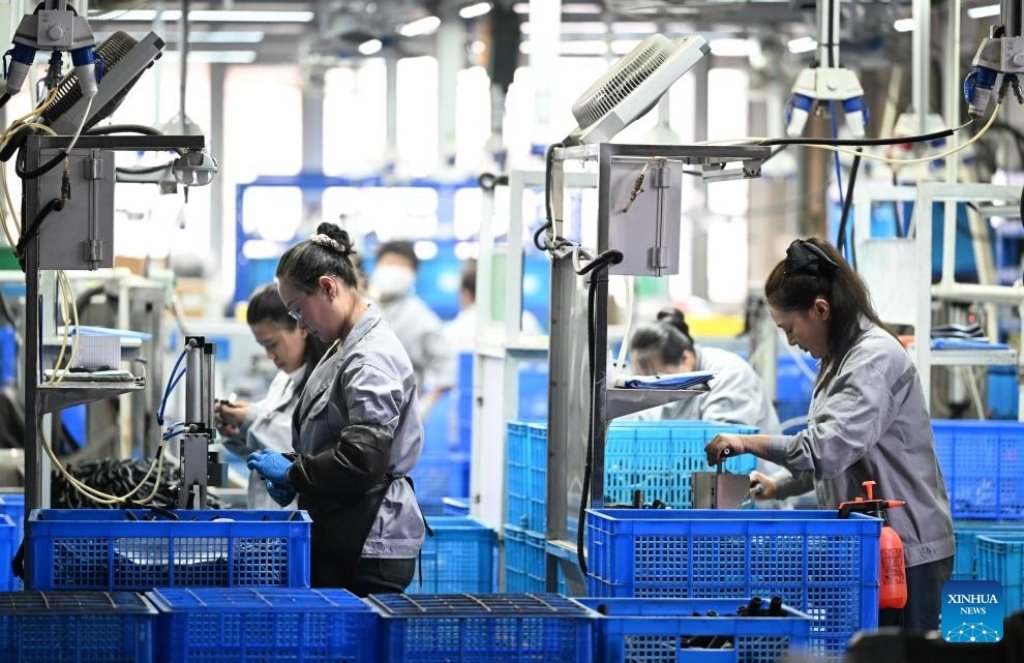
Workers operate at a workshop of Tianjin Zhongguan Automobile Parts Manufacturing Co Ltd. – Xinhua photo
As assembly plants thrive in coastal hubs like Tianjin, which houses significant joint ventures including Toyota and Volkswagen, towns like Zhongtang are becoming vital components in global production networks.
“‘Good soil’ is essential for our growth,” Gao remarked, referring to the dense concentration of automakers in the area and proactive government support through various initiatives.
Comprehensive Industrial Ecosystem
Zhongtang’s industrial ecosystem is notably extensive for a town of its size.
It encompasses a wide range of components, from doors and glass to brake pads and chassis parts.
The town is home to 15 major parts manufacturers and anticipates that total output will exceed 4 billion yuan by 2025.
The surge in NEVs has given rise to a new generation of suppliers, with many local manufacturers rapidly expanding by creating parts designed for electric drivetrains and lightweight chassis.
Some companies from Zhongtang have begun exporting their products overseas, having enhanced their technological capabilities as Chinese NEV brands venture into markets across Southeast Asia and Europe.
Support for Local Growth
The local government is actively fostering this growth. Recognizing the challenges many small firms face, the town has developed a standardized industrial park featuring “move-in-and-produce” facilities, allowing startups to quickly scale their operations.
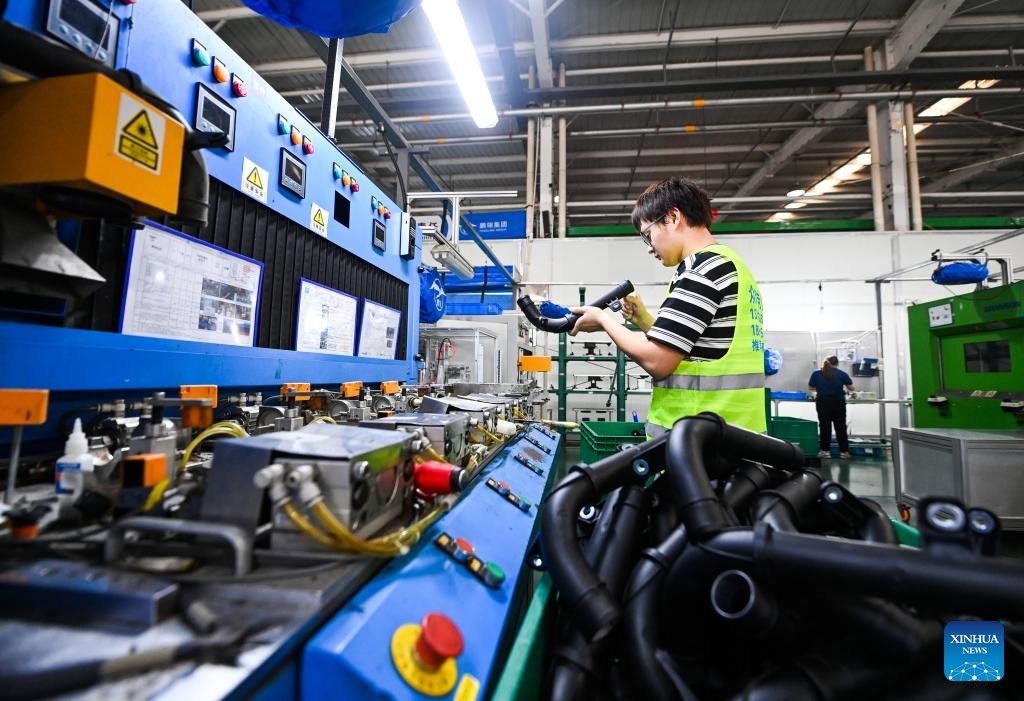
A staff member checks an automotive rubber hose at a workshop of Pengling Co Ltd. – Xinhua photo
The industrial park has already facilitated the growth of 28 companies, including Tianjin Zhongguan Automobile Parts Manufacturing Co Ltd, which started in these rented spaces and is now investing in its own facilities.
“This park has effectively served as an incubator for us,” said Li Xingqiu, the technical director of the company, emphasizing its role in their early development.
Future Prospects and Development Model
As established companies move out of the park to occupy their own specialized plants, the vacated workshops are quickly reallocated to new entrants.
This creates a sustainable cycle of incubation, growth, scaling, and replacement, fostering a cluster-based development model that emphasizes ecosystem-building over isolated firm subsidies.
In keeping with China’s competitive automotive sector, Zhongtang’s development model has enabled this once-unremarkable town to unexpectedly play a crucial role in the country’s industrial narrative, according to Wang Yin, an associate professor at Tianjin University of Finance and Economics.
“With strong policy support, a carefully planned network of specialized industrial parks, and the seamless integration of digital and intelligent technologies, Zhongtang provides a clear blueprint for other Chinese towns aiming to cultivate unique local industries,” Wang concluded. – Xinhua
The post Small Chinese town specialising in auto parts rides NEV wave appeared first on Borneo Post Online.
📈 Looking for Ways to Grow Your Savings?
After budgeting or planning your property expenses, explore smarter investing options like REITs and stocks for long-term growth.
📈 Start Trading Smarter with moomoo Malaysia →(Sponsored — Trade REITs & stocks with professional tools)
