
The commercial skyline of Miri is changing — not with skyscrapers, but with steady transactions in shoplots, mixed-use buildings, and retail corners that tell a quiet story of local entrepreneurship and measured investor interest. This article turns raw transaction data into a narrative, layering charts, tables and practical advice so you can understand where the **Miri commercial property market** really stands in 2025.
Why Commercial Property Matters in Miri’s Economy
When a shoplot changes hands, it speaks about more than a building — it signals local demand, business confidence and shifting consumer patterns. In Miri, **shoplot transactions** reflect the growth of small businesses, F&B outlets and service providers that keep neighbourhoods alive. Investors look at shoplots for steady rental income and less volatile returns than speculative residential launches.
This report uses the actual transaction dataset to map where value is concentrating, which commercial formats command the highest medians, and which neighbourhoods show the strongest activity.
Commercial Transaction Volume and Yearly Patterns
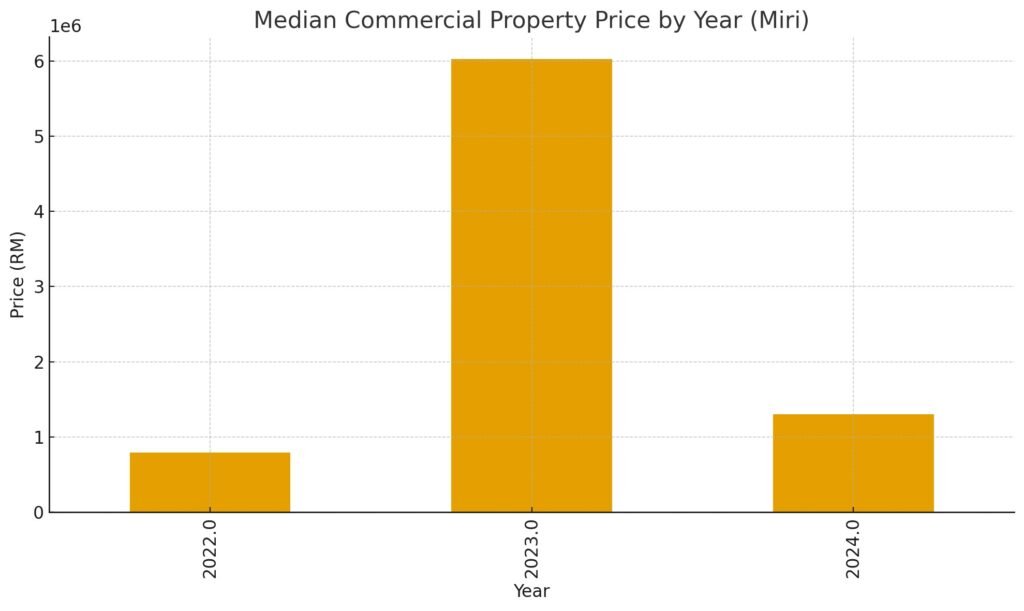
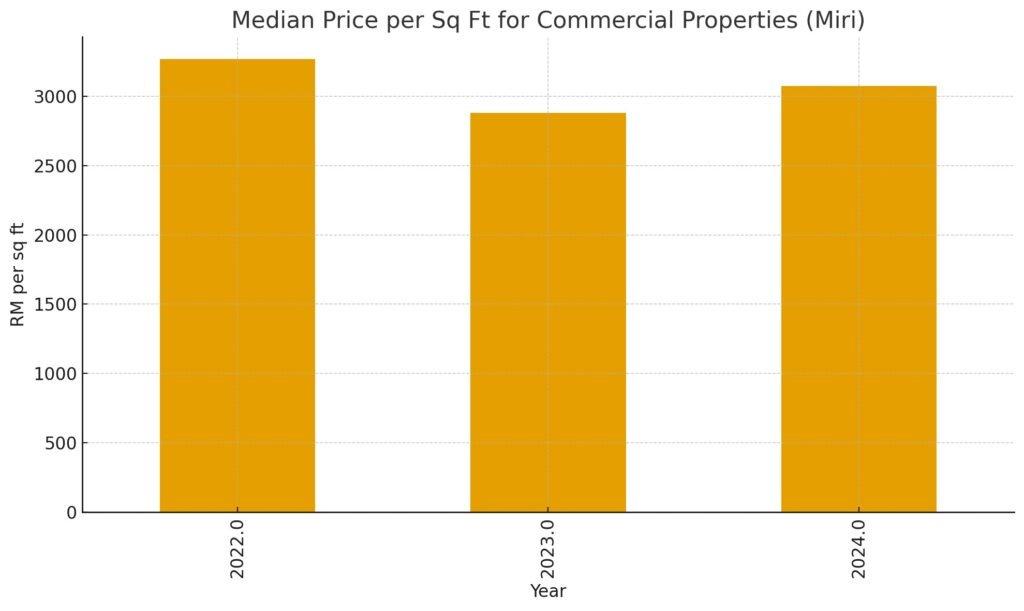
Understanding annual activity helps spot momentum. The bar chart below summarises yearly transaction counts for the dataset subset focused on Miri. Note that 2025 may be partial and should be interpreted with that caveat.
What the Volume Pattern Tells Us
Transaction counts grew from 2021 through 2024, reflecting market recovery and increased local business activity. While 2025 shows fewer recorded transactions, this is a partial snapshot and not necessarily indicative of declining demand.
Investors should interpret yearly patterns in conjunction with price trends and vacancy rates. A rise in transactions combined with steady or rising rents typically signals healthy commercial demand.
Which Commercial Property Types Command Premium Prices?
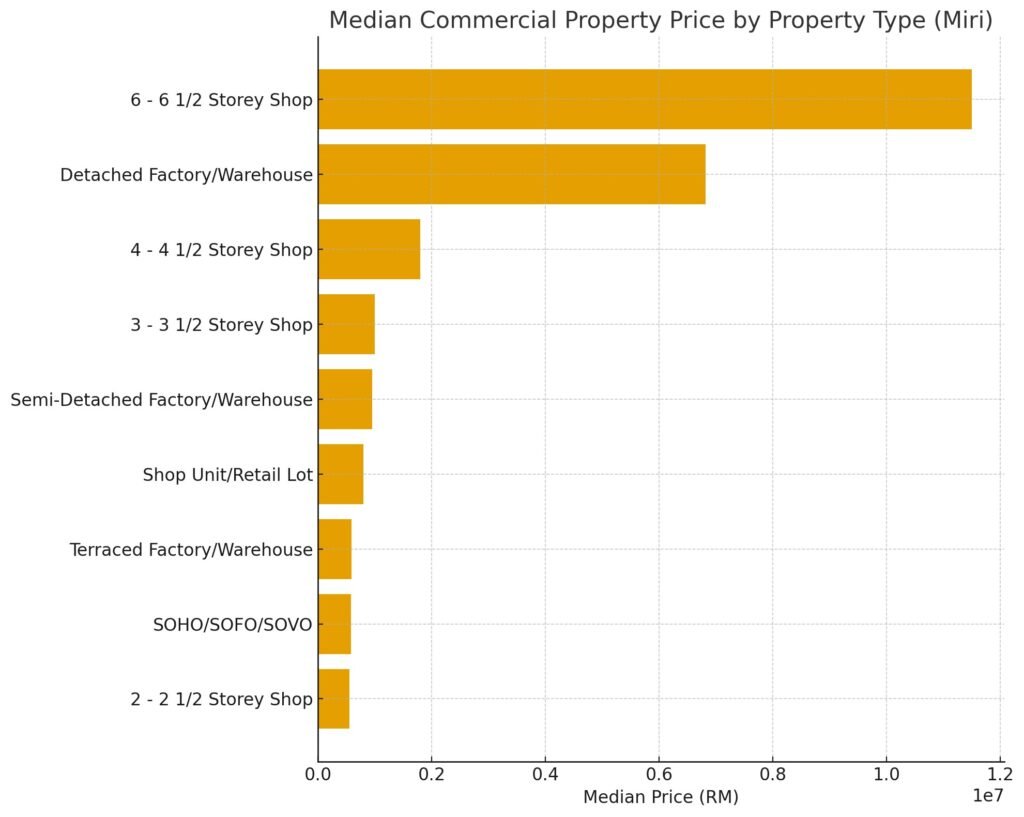
The horizontal bar chart below shows median prices by property type. Commercial formats such as multi-storey shops, detached factory/showroom combinations, and premium mixed-use units sit at the top of the list. These property types often reflect both location advantages and higher income potential.
Key Takeaway on Commercial Pricing
Multi-storey shop units and detached commercial/industrial hybrids fetch the highest medians, reflecting their scale and income generation capability. Smaller shop units and retail lots remain accessible for new investors and provide acceptable yield when located in active strips.
Price Distribution: Where Most Commercial Deals Occur
The histogram below shows how commercial transaction values are distributed. Most transactions fall into mid-range bands, with fewer extreme high-value deals.
Interpreting the Distribution
Concentration in mid-range price bands suggests a broad base of accessible commercial properties suitable for local SMEs. The smaller number of ultra-high-value transactions likely involves larger multi-storey or specialized industrial-commercial assets.
Stories from the Street: How Local Businesses Shape Demand
Meet Rahim, who opened a small café on a busy suburban strip. He paid a modest premium for a ground-floor shop with good frontage and nearby residential density. His rent-to-revenue ratio was sustainable because nearby families and commuters provided steady footfall.
Then there’s Aisha, an investor who bought a second-floor shoplot in a mixed-use block. She prioritised tenant mix over headline price, and her rental income outperformed expectations as services and coworking spaces proliferated in the area.
These narratives explain why shoplots remain attractive: they connect everyday commerce with predictable cash flow, and they help stabilise neighbourhood micro-economies.
Practical Metrics Every Commercial Buyer Should Watch
- Footfall & frontage: Street-facing shops with high visibility often command better rents.
- Tenant mix: Complementary businesses (F&B, services, convenience) create ecosystem demand.
- Building upkeep & management: Well-managed mixed-use blocks attract higher-quality tenants.
- Access & parking: Ease of access affects customer frequency and tenant retention.
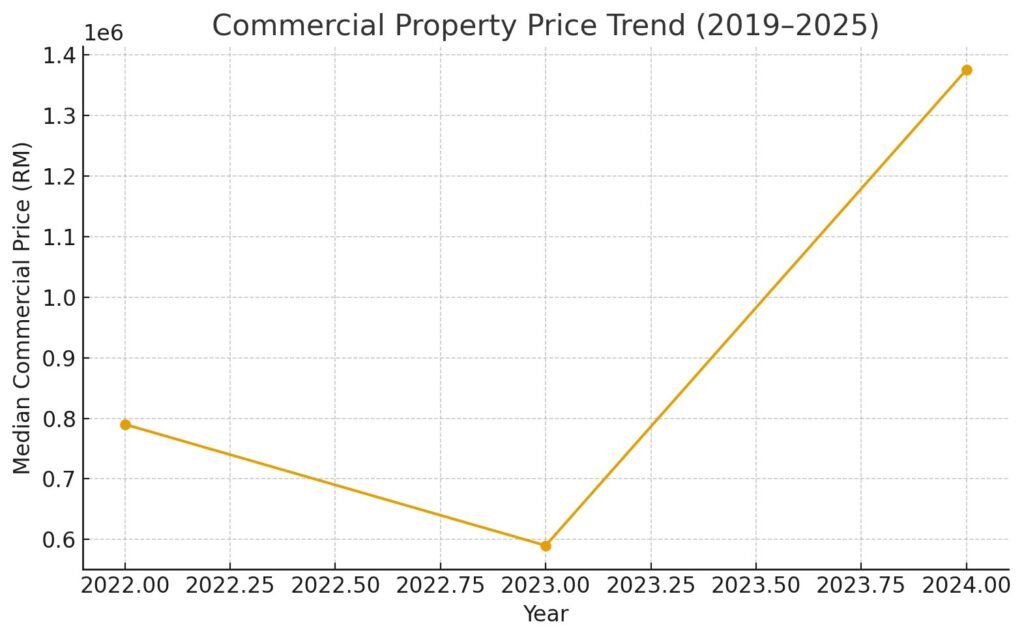
Numerical Snapshot — Commercial Medians and Volumes
Here are selected metrics from the dataset for quick reference. Use these numbers to benchmark listings and bids.
| Metric | Value |
|---|---|
| Peak Transaction Year | 2024 |
| Common Commercial Median Range | RM700,000 – RM1,800,000 |
| High-Value Commercial Medians | Up to RM11,600,000 for multi-storey shop units |
| Most Active Product | Shoplots / Retail units in suburban strips |
Investment Strategies for 2026 — Commercial Playbook
If you’re considering commercial property in Miri, adopt a strategy that balances yield, location and tenant quality. Shoplots in emerging suburban hubs offer good yield with manageable entry prices. Premium mixed-use investments can deliver higher returns but require patient capital.
- Short-term yield players: Look for ground-floor shoplots in residential clusters.
- Long-term growth players: Target mixed-use blocks near new township centres and major road links.
- Value-add investors: Renovate and improve shopfront visibility to increase rental appeal.
Risks and Mitigations — What to Watch Out For
Commercial investments face distinct challenges: tenant turnover, changing retail patterns, and local infrastructure projects that can either help or harm footfall. Conduct on-the-ground checks — speak to existing tenants, review tenancy agreements, and verify property management arrangements.
Mitigate these risks by diversifying your portfolio across micro-locations and by prioritising properties with flexible layouts that can accommodate multiple business types.
Short FAQ — Quick Answers for Busy Investors
Are shoplots a safe investment in Miri right now?
Shoplots remain a stable investment when located in high-density suburban strips with proven footfall. They are generally less volatile than speculative residential projects.
What is the typical entry price for commercial shoplots?
Entry prices vary widely, but many active shoplot deals in the dataset fall within the RM700,000 – RM1,800,000 range, depending on location and frontage.
Should I target ground-floor or upper-floor units?
Ground-floor units typically deliver higher rental yields due to better visibility. Upper-floor units may be cheaper but often require specific tenant mixes and offer lower footfall.
How important is tenant mix?
Extremely important. A balanced tenant mix creates mutual support among businesses, increases customer dwell time and improves overall rental stability.
References and Data Source
This analysis uses the transaction dataset provided and references the official NAPIC open sales data portal for broader context. For verification and broader exploration, see the NAPIC portal: NAPIC Open Sales Data.
Final Thoughts
Miri’s commercial property market offers a blend of accessible shoplots for income-focused investors and higher-end mixed-use opportunities for long-term players. The dataset shows a market that is maturing — one that rewards careful site selection and attention to tenant quality.
📈 Looking for Ways to Grow Your Savings?
After budgeting or planning your property expenses, explore smarter investing options like REITs and stocks for long-term growth.
📈 Start Trading Smarter with moomoo Malaysia →(Sponsored — Trade REITs & stocks with professional tools)
