
Niah National Park is one of Sarawak’s greatest natural treasures—a place where history, adventure, and mystery come together under one rainforest canopy. Located about 1 hour and 15 minutes from Miri City, this national park is famous for its massive caves, prehistoric archaeological sites, and lush jungle trails. Whether you are a nature lover, an adventurer, or a traveler seeking meaningful experiences, this Niah National Park Guide will help you plan an unforgettable trip.
Stepping into Niah feels like entering a different world. Sunlight filters through towering limestone formations. Birds and insects echo through the forest. Every trail leads to something ancient, something untouched, something awe-inspiring. This guide takes you through the best things to do, the stories behind the caves, and everything you need to know to explore the park comfortably and safely.
Let’s begin your journey into one of Borneo’s most extraordinary natural and cultural landmarks.
The Fascinating History Behind Niah National Park
Niah isn’t just beautiful—it is one of Southeast Asia’s most important archaeological sites. This place holds evidence of human presence dating back at least 40,000 years. Imagine standing in a cave once used by ancient humans, traders, and explorers long before any civilization existed around the region.
The discovery of the “Deep Skull”—one of the world’s oldest human remains—put Niah on the global map. Archaeologists have uncovered tools, pottery, and ancient drawings on cave walls. Every stone and crevice carries thousands of years of human stories.
Today, visitors can explore these same caves, walk the same paths, and see the same limestone formations that early humans once knew so well. It’s a rare opportunity to witness both natural beauty and archaeological significance in one place.
What Makes Niah National Park Special?
There are many caves in Malaysia, but Niah stands out for its mixture of history, accessibility, and breathtaking geology. Here’s what makes it unique:
- Ancient heritage: Prehistoric artifacts, paintings, and burial sites.
- Massive cave formations: Including the iconic Great Cave, which feels like a cathedral built by nature.
- Rich biodiversity: Tropical rainforests, exotic birds, insects, and the famous swiftlets.
- Adventure-friendly trails: Safe boardwalks, jungle paths, and well-marked routes.
- Close to Miri: Easy day trip from the city.
Whether you’re seeking photography spots, historical insights, or outdoor adventure, Niah offers something for every traveler.
How to Get to Niah National Park From Miri
Most travelers start their journey from Miri, the nearest city. The route is straightforward and pleasant.
By Car
Driving takes around 1 hour and 15 minutes. Simply follow the coastal highway towards Batu Niah town. Parking is available at the park entrance.
By Tour Package
Several local operators in Miri offer half-day or full-day Niah tours. These include transportation, guides, and sometimes meals.
By Bus
Buses to Batu Niah are available, but you will need a taxi or Grab from the town to reach the park headquarters.
Whichever method you choose, the journey is smooth and scenic, taking you past small towns, palm plantations, and forested areas.
Entrance Fees & Operating Hours
The park operates daily and welcomes both locals and international visitors.
- Entrance Fee (Malaysian): Reasonable and affordable.
- Entrance Fee (Non-Malaysian): Slightly higher but still budget-friendly.
- Opening Hours: 8:00 AM – 5:00 PM
Visitors should arrive early, especially if planning to explore the Main Cave and Painted Cave within the same day.
The Famous Great Cave: A Natural Wonder
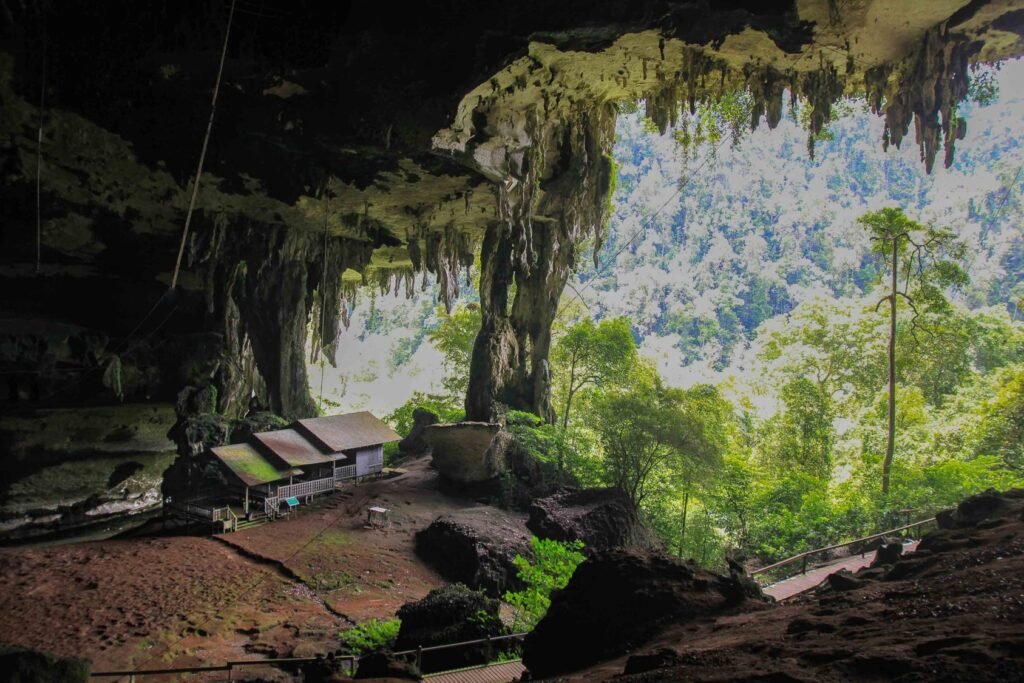
The Great Cave is the highlight of Niah National Park. It is enormous, dramatic, and jaw-dropping. The moment you step onto the wooden walkway leading into the cave’s mouth, the temperature cools, and a sense of wonder takes over.
The cave’s entrance is so massive that it almost frames the sky. Once inside, the ceilings rise several stories high, with shafts of sunlight illuminating the cavernous interior. You can see ancient bird’s nest collectors climbing bamboo poles—an old tradition still practiced today.
The enormous size of the Great Cave makes it one of the largest cave entrances in the world, and walking through it feels like stepping into a giant’s cathedral.
Inside the Great Cave: What You Will See
The interior of the cave is dark in some places, beautifully lit in others, and always full of atmosphere. Here are highlights you shouldn’t miss:
- Trader’s Cave: The first chamber, with old wooden platforms once used by guano and bird’s nest traders.
- Main Chamber: A vast open space with towering pillars and natural formations.
- Bird’s Nest Harvesting Poles: Tall, thin poles used by skilled climbers to collect swiftlet nests.
- Ancient guano deposits: A reminder of the cave’s ecological significance.
Walking through the Great Cave gives you a sense of time, culture, and nature converging in one place.
Painted Cave: The Archaeological Treasure of Niah
A short hike from the Great Cave leads you to the Painted Cave. This is where archaeologists discovered ancient human remains and burial artifacts. The walls contain prehistoric paintings—simple shapes, silhouettes, and figures telling stories from thousands of years ago.
Although some drawings have faded over time, you can still see outlines and patterns. Standing in front of these paintings creates a powerful connection between the present and the distant past.
Painted Cave is protected by barriers to preserve its archaeological value, but visitors can view the artwork clearly from designated observation areas.
The Jungle Trails of Niah
Before reaching the caves, you’ll walk through a beautiful rainforest trail. The boardwalk is well-maintained and suitable for beginners. Along the way, you may encounter:
- Exotic birds
- Colorful butterflies
- Long-tailed macaques
- Unusual insects
- Thick, lush vegetation
The trail itself is an experience. The soundscape of Niah is worth the trip alone—rustling leaves, distant calls of birds, and the subtle hum of jungle life.
Essential Packing Tips for Niah National Park
To make your journey comfortable and safe, bring these essentials:
- Headlamp or torchlight (important for dark cave sections)
- Comfortable walking shoes
- Bottled water
- Light snacks
- Rain jacket or poncho
- Insect repellent
- Small towel (it gets humid)
A good light source is crucial because some cave areas are pitch black. Even a smartphone flashlight can be insufficient.
Best Time to Visit Niah National Park
The best time to visit is during the dry season, typically between March and September. Trails are less slippery, and the heat is manageable within the caves.
Avoid heavy rainy periods if possible, as boardwalks can get wet and some parts of the trail may feel more challenging.
Wildlife You Might See in Niah
Niah is home to a variety of wildlife. While large animals tend to stay deeper in the forest, travelers often spot:
- Swiftlets and bats in the caves
- Monitor lizards near streams
- Hornbills flying overhead
- Macaques near the entrance
- Colorful jungle insects
Always observe wildlife from a safe distance to protect yourself and the animals.
Guided Tours vs. Self-Guided Visits
Guided Tours
Great for first-time visitors. A knowledgeable guide can point out cave features, wildlife, and historical stories you might miss on your own.
Self-Guided Tours
The park is well-marked, making it easy to explore independently. This option is ideal for travelers who prefer going at their own pace.
Food, Facilities & What to Expect
There is a small cafeteria and rest area near the park headquarters. However, choices are limited, so bringing snacks or packing a light meal is recommended.
The park offers restrooms, shelters, and wooden benches along the trails. Drinking water stations may not always be available, so carry your own hydration.
Safety Tips for Your Visit
Although the trails and caves are safe for most visitors, a few precautions will ensure a smooth trip:
- Watch your step on wet or mossy boardwalks.
- Use a headlamp in dark areas.
- Stay on marked paths at all times.
- Avoid feeding wildlife.
- Bring enough water, especially on hot days.
Niah is beginner-friendly, but being prepared makes the journey even more enjoyable.
Why Niah National Park Is a Must-Visit in Sarawak
Few places in the world combine natural beauty, prehistoric history, and easy accessibility the way Niah does. The enormous caves, the ancient paintings, the peaceful jungle trails—everything blends into a powerful travel experience.
Whether you’re exploring the Great Cave, learning about the region’s human history, or simply enjoying the cool air inside the limestone formations, Niah leaves a lasting impression. It is one of Sarawak’s most important attractions, and a destination every traveler should experience at least once.
As you walk the paths ancient humans once walked, you realize Niah is not just a park. It’s a story thousands of years old. And now, you’re part of it too.
FAQ: Niah National Park Guide
How long does it take to explore Niah National Park?
A full visit, including the Great Cave and Painted Cave, typically takes 3 to 5 hours depending on your pace.
Is the Niah cave trail suitable for beginners?
Yes. The boardwalk is well-maintained and safe, though some sections are dark or humid. A flashlight is recommended.
Can children visit Niah National Park?
Absolutely. Many families visit the caves, but parental supervision is important due to dark areas and slippery spots.
Do I need a guide?
A guide is optional. The park is easy to explore, but guided tours provide extra historical insights.
Is the Painted Cave still open for visitors?
Yes, although the artifacts and drawings are protected. Visitors can view them clearly from designated platforms.
📈 Looking for Ways to Grow Your Savings?
After budgeting or planning your property expenses, explore smarter investing options like REITs and stocks for long-term growth.
📈 Start Trading Smarter with moomoo Malaysia →(Sponsored — Trade REITs & stocks with professional tools)
